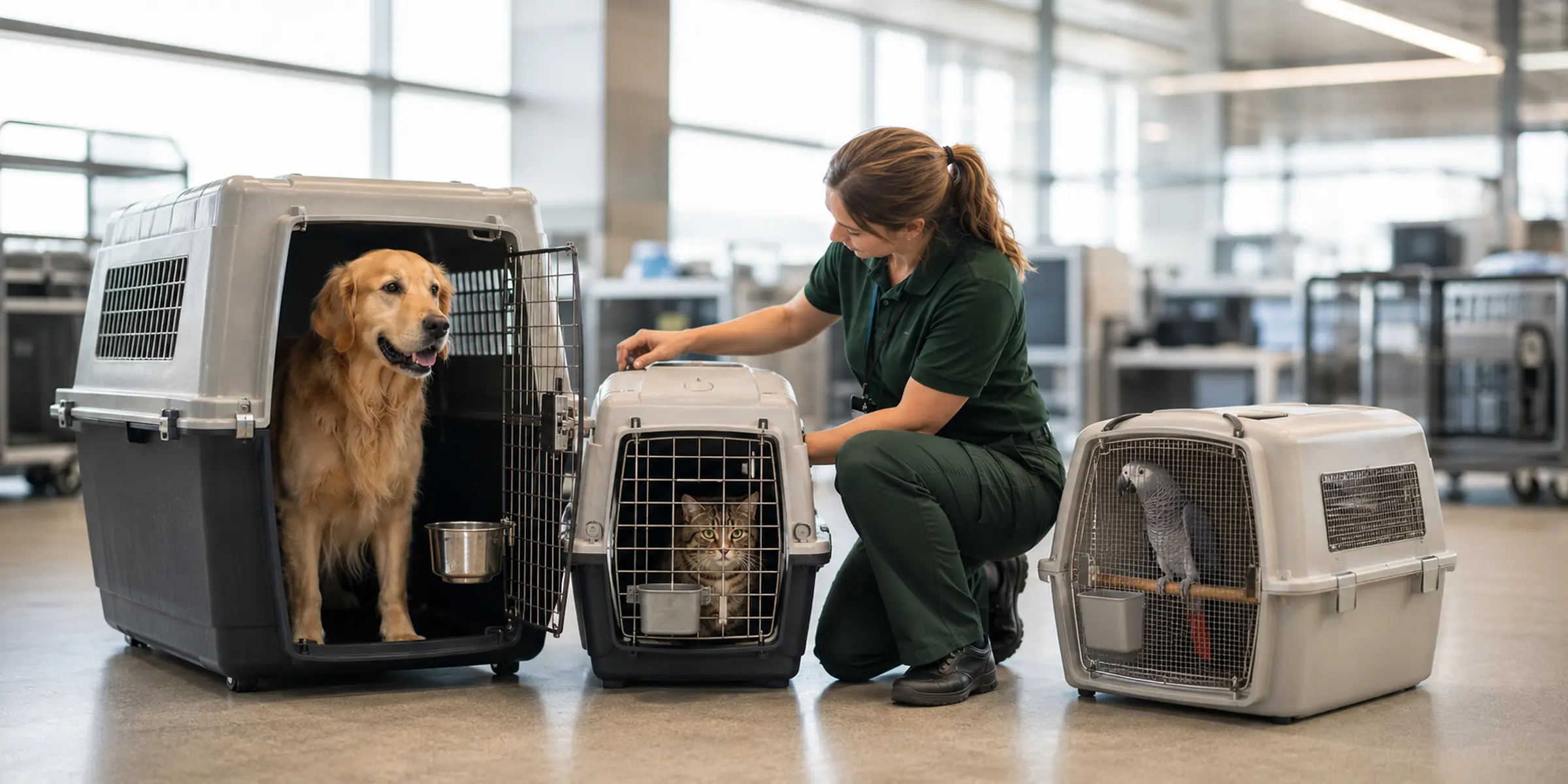
The Pet Parent’s Stress Survival Guide: 7 Ways to Comfort Your Dog Before the Big Flight
Moving overseas is stressful for humans, but for our pets, it can be a confusing sensory overload. As a pet transport agency, our job is to handle the logistics and safety, but your job—the emotional preparation—is just as critical.
Many owners ask us, “Will my dog be scared?” The honest answer is that travel is new and different, but with the right preparation, it doesn’t have to be traumatic.
Use this vet-approved survival guide to ensure your companion is calm, confident, and ready for their journey.
-
The “Safe Haven” Crate Method (Start Early!)
The single biggest factor in your pet’s stress level is their relationship with their travel crate. If the first time they see the crate is on moving day, they will be terrified. If they see the crate as their bedroom, they will feel secure.
The Action Plan:
- Buy it early: Get your IATA-compliant crate at least 4 weeks before departure.
- Open door policy: Remove the door initially. Place the crate in the living room and feed your dog their meals only inside the crate.
- Create positive associations: Hide high-value treats inside for them to discover.
- The Goal: Your dog should voluntarily go into the crate to nap. This transforms the crate from a “cage” into a “safe haven.”
-
The Scent of Home
Animals navigate the world through scent. In the cargo hold, the air will smell like machinery and other animals. To ground them, they need the scent of you.
What to Pack:
- Take an old t-shirt or pillowcase that you have worn and do not wash it.
- Place this item in their crate during the flight.
- Fact Check: Avoid heavy blankets or large bedding, as airlines may remove these for safety/security reasons. A thin, absorbent vet-bed or puppy pad topped with your scented t-shirt is the industry standard for hygiene and comfort.
-
The “No Sedation” Rule
It is a common myth that you should sedate your pet for travel. Do not do this.
The International Air Transport Association (IATA) and reputable veterinarians strictly advise against sedating pets for air travel. Sedation lowers blood pressure and can interfere with a pet’s natural ability to balance and regulate their body temperature at high altitudes.
Alternative: Talk to your vet about natural pheromone collars (like Adaptil for dogs or Feliway for cats) which are generally permitted and safe.
-
The Pre-Flight Workout
A tired dog is a calm dog. Anxiety often manifests as nervous energy. On the day of the flight (or the day of collection), ensure your dog gets significant exercise.
- For Dogs: A long, vigorous walk or a game of fetch 3-4 hours before check-in.
- For Cats: Engage them with a laser pointer or feather toy until they are visibly tired.
-
Hydration and Feeding Timing
Motion sickness can increase anxiety. To prevent nausea, manage their intake carefully on travel day.
- Feeding: Offer a light meal about 4 to 6 hours before the flight. Do not feed a heavy meal right before check-in, as a full stomach can cause vomiting during turbulence.
- Water: Offer water right up until the moment you hand them over to our team. Hydration is vital.
-
The “Quick Goodbye” Technique
Pets are emotional sponges—they soak up your feelings. If you are crying, shaking, and hugging them tightly at the airport, they will think something is wrong.
How to handle the handover:
- Keep your voice upbeat, calm, and firm.
- Say a quick “Good boy/girl!” and step away.
- Trust the handlers. Once you leave, pets often settle down much faster than when their anxious owners are present.
-
Desensitise to “Travel Sounds”
Airports and planes are noisy. You can prepare your pet for this at home.
The Drill:
- Play recordings of aircraft take-offs, luggage carts, and loudspeakers at a low volume while playing with your dog.
- Gradually increase the volume over a week.
- This “noise desensitisation” ensures that when they hear a jet engine, they remain unbothered.
Need help choosing the right crate size? -> contact us.