In brief: Heathrow Animal Reception Centre (HARC) is Heathrow Airport’s specialist facility for animals. For arriving pets, its role can include transferring animals from the aircraft, checking welfare and travel containers, and reviewing compliance with the relevant import requirements.
The exact process and timing depend on the animal, airline, route, documentation and appointed clearing agent. Careful planning before the flight is the best way to reduce avoidable delays.
Important: HARC’s animal and documentation checks are only part of the arrival process. Customs clearance and collection arrangements must also be coordinated with the airline, handling agent and nominated UK clearing agent.
What is Heathrow Animal Reception Centre?
HARC is a live-animal Border Control Post and Travellers’ Point of Entry at Heathrow. It handles many different species, including dogs, cats, birds, reptiles and other animals entering through the airport.
Its responsibilities include:
- Transporting animals between the aircraft and the reception facility
- Monitoring animal welfare during the reception process
- Checking eligible non-commercial arrivals against the Pet Travel Scheme
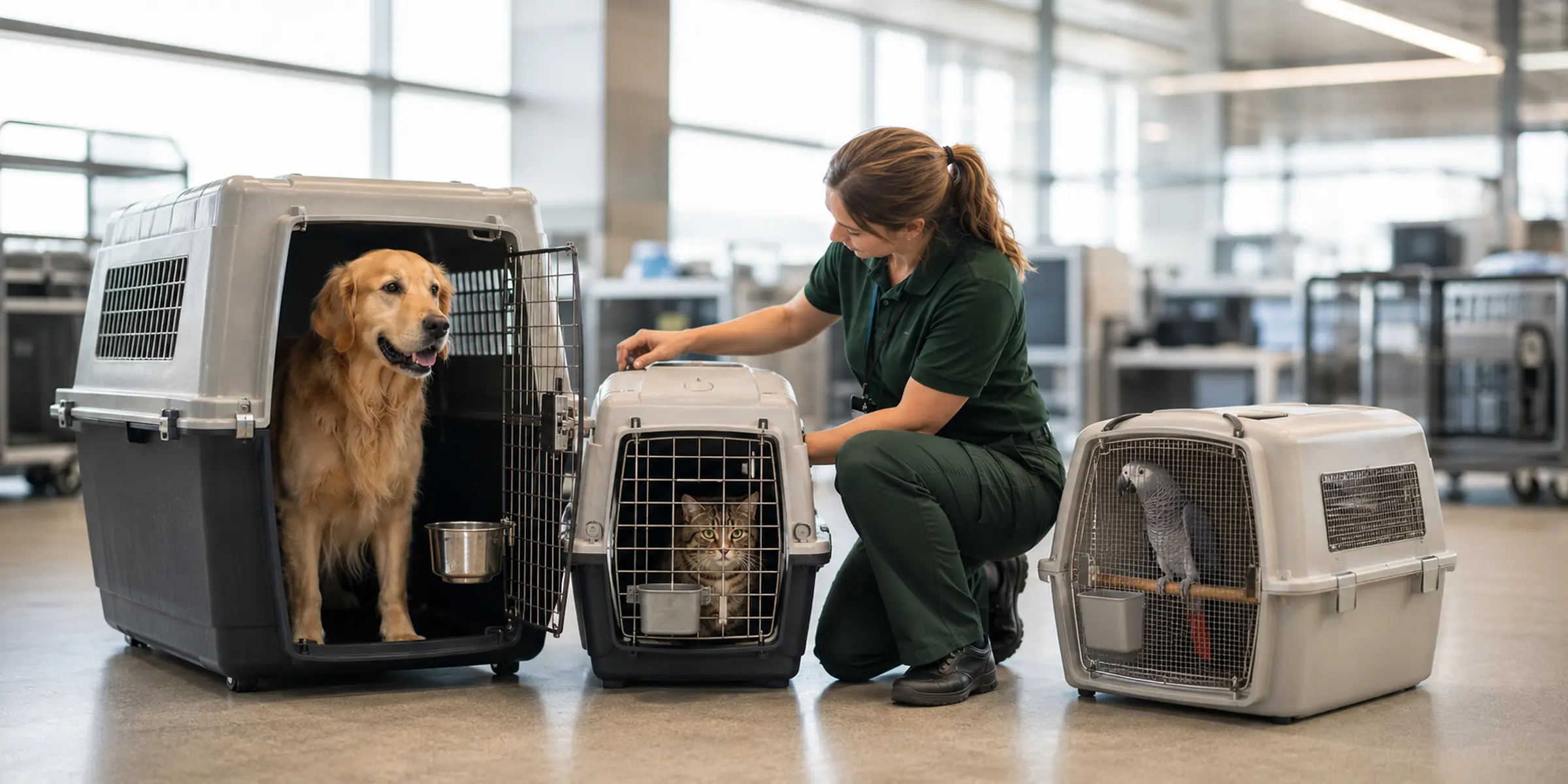
- Checking that travel containers meet the applicable IATA requirements
- Supporting compliance with animal-movement and import regulations
For official information, visit the Heathrow Animal Reception Centre guidance.
Pet imports: what happens after arrival?
Every journey is different, but a typical pet import through Heathrow follows these stages:
Step 1: Aircraft arrival and transfer
- Your pet is unloaded by the airline’s ground-handling team
- HARC transports the animal from the aircraft to its facility
- The travel container and the animal’s immediate welfare are checked
Step 2: Health and compliance checks
- Travel documents are reviewed against the applicable entry route
- Microchip, vaccination and treatment records may be checked
- Additional action may be required if information is missing or does not match
Step 3: Customs clearance
- The nominated UK agent completes the required customs-clearance process
- Health-document approval and customs clearance must both be completed before release
- Any charges or outstanding information are resolved through the relevant agent
Step 4: Release and onward journey
- Your pet is released once the required checks and clearance are complete
- Collection or onward delivery follows the arrangements made in advance
- Owners should allow flexibility because processing times can vary
Read more about pet travel requirements and documentation.
Pet exports: what to expect before departure
Export arrangements vary by airline and handling agent. Not every departing animal follows exactly the same handover route, so the correct process must be confirmed before the travel date.
1. Pre-flight confirmation
- Airline acceptance is confirmed for the animal, route and date
- The correct handover point and arrival time are confirmed
- Any breed, species, temperature or aircraft restrictions are checked
2. Documentation and crate preparation
- Export documents are completed within the correct validity windows
- The travel crate is suitable, secure and correctly labelled
- Water containers and any required feeding instructions are fitted
3. Check-in and airline handover
- Your pet and documentation are presented at the agreed location
- The crate and documents receive final acceptance checks
- Your pet enters the airline’s live-animal handling process for departure
JCS can also help with made-to-measure IATA travel crates.
How to reduce delays and travel-day stress
- Confirm the airline, route and handling arrangements before paying for travel
- Map every document deadline against the planned flight date
- Check names, microchip numbers and vaccination dates across all paperwork
- Arrange customs clearance and collection before the animal departs
- Allow a realistic buffer for traffic, check-in and operational delays
- Keep printed documents and digital backups accessible
Planning tip: Do not arrange a tightly timed reunion or onward journey based only on the scheduled landing time. Unloading, transport to HARC, checks and clearance all happen after the aircraft arrives.
Heathrow pet travel checklist
Before travel
- Airline acceptance confirmed for the exact route and date
- Import or export requirements confirmed for the animal
- Certificates, permits and treatments completed on time
- Travel crate checked, labelled and ready
- UK clearing agent and customs arrangements confirmed where required
- Collection or delivery arrangements booked
On the day
- Original documents and printed copies are accessible
- Digital backups are stored separately
- Emergency and agent contact details are available
- Travel time and a sensible delay buffer have been allowed
- Your telephone remains available for questions or updates
How JCS Pet Travel can help
JCS Pet Travel can coordinate the practical stages of a Heathrow pet journey and help owners understand what must happen before, during and after the flight.
- Route and airline checks: confirming suitable travel and acceptance arrangements
- Documentation planning: mapping certificates, veterinary work, permits and deadlines
- Crate support: helping source and check a suitable travel crate
- Heathrow coordination: supporting customs clearance, collection and onward arrangements
- Travel updates: keeping owners informed as the journey progresses
Explore our pet transport services, learn more about JCS Pet Travel, or read how to help your dog or cat settle after relocation.
Heathrow HARC FAQs
More answers are available on our pet travel questions page.
Planning a Heathrow pet journey?
Share your pet’s details, route and proposed travel date with JCS Pet Travel for personalised guidance.